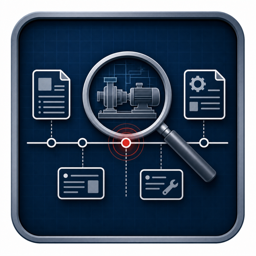
Root-Cause Analysis and Asset-History Copilots
Operational friction: Maintenance and reliability teams often lose time gathering context from work orders, notifications, procedures, drawings, inspection records, time-series trends, and expert knowledge.
Practical approach: Design analytics and AI-assisted workflows that bring relevant operational context together so investigations move faster and with greater confidence.
Potential outcomes
- Faster access to relevant asset history
- Better visibility into recurring issues
- More structured root-cause analysis
- Reduced manual search effort
- More consistent troubleshooting workflows
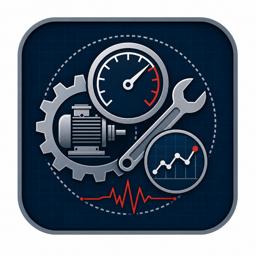
Reliability and Maintenance Intelligence
Operational friction: Reliability teams need better visibility into bad actors, recurring failures, asset health, backlog, maintenance execution, and risk.
Practical approach: Connect maintenance and reliability data into practical decision-support views that help teams prioritize action.
Potential outcomes
- Better bad-actor visibility
- More focused maintenance discussions
- Improved backlog understanding
- Stronger link between reliability issues and work execution
- Faster pattern recognition across historical work
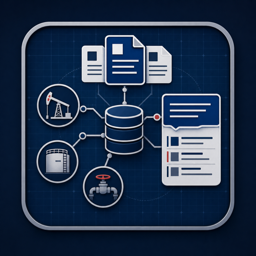
Operational Knowledge Assistants
Operational friction: Valuable industrial knowledge is often trapped across documents, records, systems, and experts.
Practical approach: Design source-backed assistants grounded in trusted company data, SAP-style records, asset structures, time-series context, and operational events.
Potential outcomes
- Faster technical research
- Better access to procedures and historical context
- Improved knowledge transfer
- More consistent answers across teams
- Stronger foundation for GenAI adoption
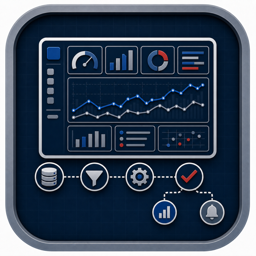
Self-Service Operational Analytics
Operational friction: Many operational questions should be answered through trusted dashboards, semantic models, and reporting products rather than manual analysis.
Practical approach: Design operational analytics that support real operating rhythms and reduce reporting friction.
Potential outcomes
- Less manual reporting
- Better visibility into KPIs
- Clearer operating-rhythm discussions
- More consistent metrics
- Faster movement from reporting to action
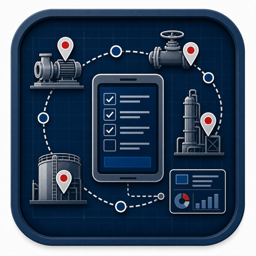
Connected Worker Workflows
Operational friction: Field execution data is often trapped in paper forms, spreadsheets, emails, or inconsistent manual processes.
Practical approach: Digitize frontline workflows so operator rounds, checklists, inspections, and autonomous maintenance activities become structured, visible, and reusable.
Potential outcomes
- Better field data capture
- Improved workflow visibility
- Easier follow-up on field findings
- Stronger connection between field work and analytics
- More reliable foundation for AI and automation
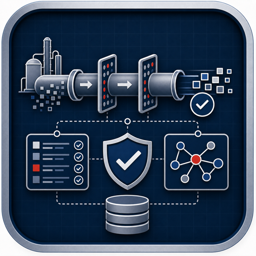
Data Quality and AI Readiness
Operational friction: AI struggles to deliver trusted answers when work orders, notifications, asset hierarchies, documents, time-series data, and field workflows are disconnected.
Practical approach: Assess and improve the readiness of operational data before investing heavily in AI-enabled workflows.
Potential outcomes
- Clearer understanding of data gaps
- Better source-system ownership
- Stronger data model and context strategy
- More reliable AI pilot scoping
- Reduced rework during implementation
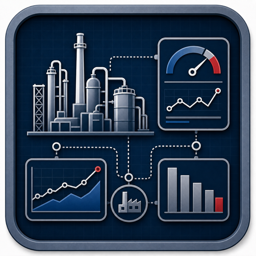
Production and Performance Visibility
Operational friction: Production, reliability, cost, and activity data often live in separate systems, making business performance harder to understand.
Practical approach: Connect data streams into practical views that support faster, more informed decisions.
Potential outcomes
- Improved production surveillance
- Better deferral tracking
- Clearer performance trends
- More useful executive reporting
- Stronger connection between operations and business impact
Shift Handover and Event Intelligence
Operational friction: Shift notes, alarms, observations, and follow-up actions often live in disconnected tools or informal handovers, making continuity harder to maintain.
Practical approach: Connect handover notes, event context, alarms, field observations, and operating data into practical views that show what changed, what matters, and what needs follow-up.
Potential outcomes
- Clearer shift-to-shift continuity
- Better visibility into unresolved issues
- Faster alarm and event review
- More consistent follow-up across crews
- Stronger link between daily events and improvement work